
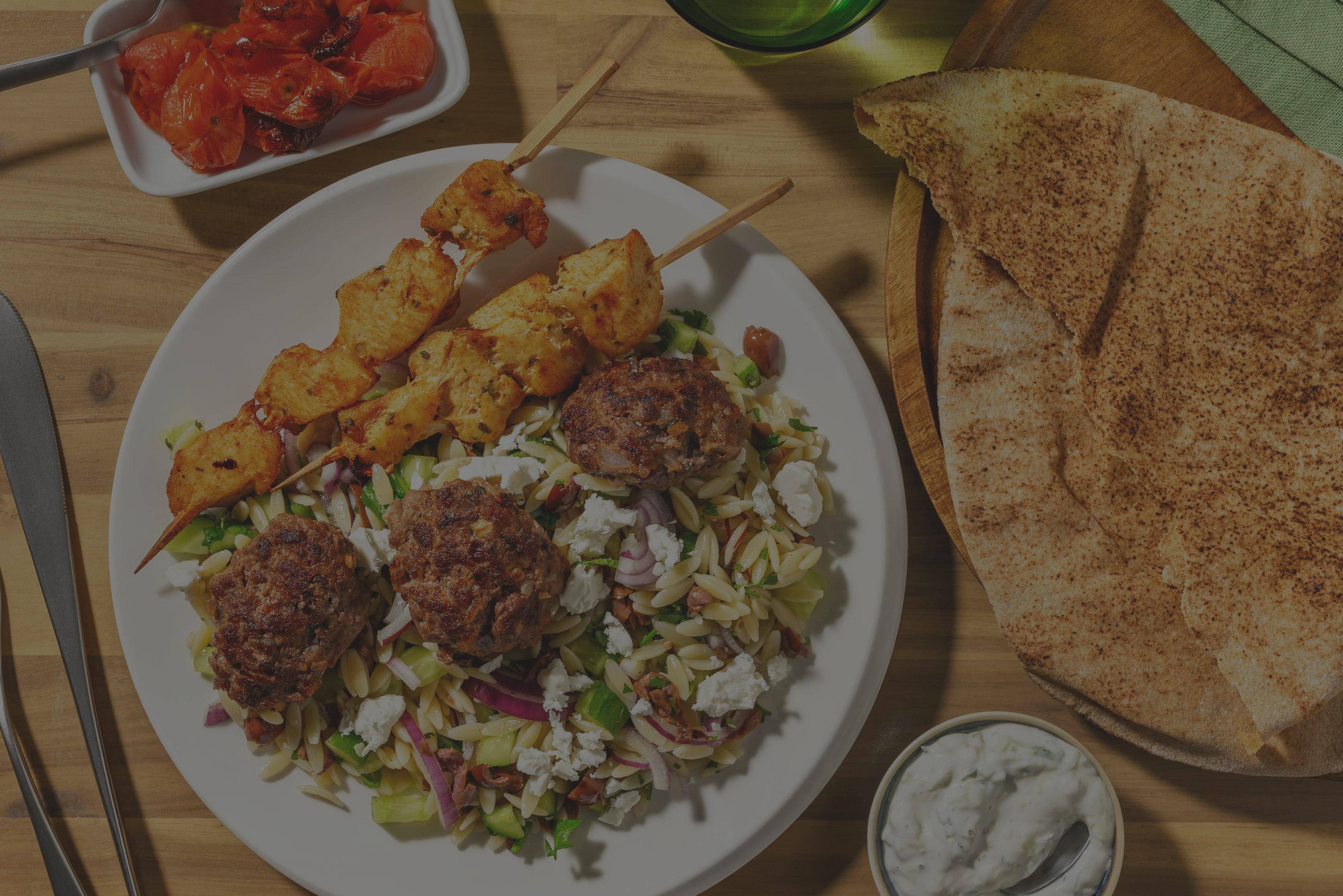
Sometimes, learning to cook can feel like learning a whole new language. Because there's so much specialist culinary lingo, it can leave your head spinning. Everyone loves Eastern Mediterranean dishes, like gyros, souvlaki and kebabs, but the differences between them can be hard to figure out. Here's the complete lowdown on these tasty treats.
Souvlaki vs gyros: the key differences
Both souvlaki and gyros hail from Greece, and they're some of the most popular Greek recipes around. People love to make them at home and order takeaway, and they're certainly very similar. However, there are some key differences between them.
The most important difference is the kind of meat they use. Gyro meat is stacked on a vertical rotisserie, like the kind you normally see in a kebab shop. The meat revolves slowly as it cooks, and chefs shave off thin slices. On the other hand, souvlaki is made with marinated pieces of meat, which are strung on skewers and grilled.
The right meat for souvlaki or gyros
Gyros are traditionally made using pork, but other meats are sometimes used, too. Recipes for souvlaki are more flexible. While pork is common, you can also find souvlaki made with chicken or lamb — a popular choice in many lamb recipes. Of course, nowadays, there are also tasty vegetarian and vegan versions of these classic Mediterranean recipes, so everyone can join in the fun. These gyro-style bulgur bowls may not be totally traditional, but they taste amazing!
Differences when serving souvlaki and gyros
One final difference between souvlaki and gyros comes in the way they are served. Gyros are traditionally served in pita bread with salad veggies, like tomatoes, onions and lettuce, and then topped with tzatziki sauce. Souvlaki can be used as a filling for pita, too, but they can also be served in a salad with no bread like this souvlaki roast lamb & Greek salad recipe shows. They're often enjoyed still on the skewer for a delightfully rustic treat.
Greek gyros and souvlaki vs Turkish kebabs
Kebabs are a cousin of gyros and souvlaki. They've been enjoyed all over the Middle East for centuries, but most people agree that, at heart, they're Turkish recipes. As Turkey is a Muslim country, they aren't made with pork. Instead, kebabs usually use lamb, beef, or chicken.
To make matters more confusing, kebabs can be cooked on vertical rotisseries, like gyros, or grilled on skewers like souvlaki. Unlike souvlaki, the skewers for shish kebabs may also include veggies alongside the meat. Kebabs can also be made with minced meat, spiced and rolled into tasty balls or fingers.
Making gyros, souvlaki and kebabs at home
Let’s be honest: unless you live above a kebab shop, you probably don’t have easy access to a vertical rotisserie. They can make authentic gyros a little tricky — and maybe a bit too ambitious when you're preparing student meals or a quick weeknight dinner. However, there are lots of great recipes inspired by gyros, but with easier methods, suitable for everyday cooking. Try pork kofta with minced meat for simplicity. A few Mediterranean herbs and spices, such as dried oregano, will give these gyros an authentic Greek flavour.
On the other hand, souvlaki is very easy to prepare at home. Remember that the meat is usually marinated for flavour, often in a mixture of extra-virgin olive oil, lemon juice, garlic and herbs. You can start this step early, leaving it in its marinade in the fridge overnight or for a few hours beforehand. If you’re using wooden skewers, soak them in water for at least an hour before you start cooking, which will prevent them from splintering in the heat.
Souvlaki can be served in a number of different ways — in a pita, over a salad, or however you want. Just be sure to take the meat off the skewers before indulging if you’ve got little kids. Older kids, teens and adults may enjoy the sensory fun of nibbling the chunks off the skewers!
Gyros, souvlaki and kebabs can all be cooked under a grill, on the stovetop, or on a barbecue. If you’ve got a griddle pan, this is a great time to dust it off and get some nice char lines on the meat.
Gyros vs Souvlaki FAQs
What is the difference between souvlaki and gyros?
Souvlaki is made with marinated meat and grilled on skewers. Gyros are made from meat cooked on a vertical rotisserie, which gets shaved into the dish, like in a typical kebab shop. Gyros are usually served in pita bread, but souvlaki can be served in pita, on a salad, or still on the skewers.
Are souvlaki or gyros healthier?
It’s easier to make souvlaki healthier than gyros — simply skip the pita and go heavy on the salad. However, both dishes can be quite healthy or unhealthy, depending on the amount of oil you use and the sauces you serve them with.
What’s the difference between a gyro and a kebab?
Kebabs can be cooked in different ways — on a vertical rotisserie or grilled on skewers for a shish kebab. Gyros originated in Greece and are usually made from pork. Kebabs, on the other hand, are Turkish or Middle Eastern and often made of lamb, beef and chicken (pork kebabs are not common).
What’s the difference between a kebab and souvlaki?
Kebabs, similar to shish kebabs, are grilled on skewers like souvlaki. However, souvlaki skewers feature only grilled meat, while kebab skewers often have veggies as well.
Is souvlaki Greek or Turkish?
Souvlaki is Greek in origin, but there are many similar dishes in Turkey. There have been many debates between the two countries about who invented grilled meat skewers. Things can get quite heated, so it's best not to get involved!