
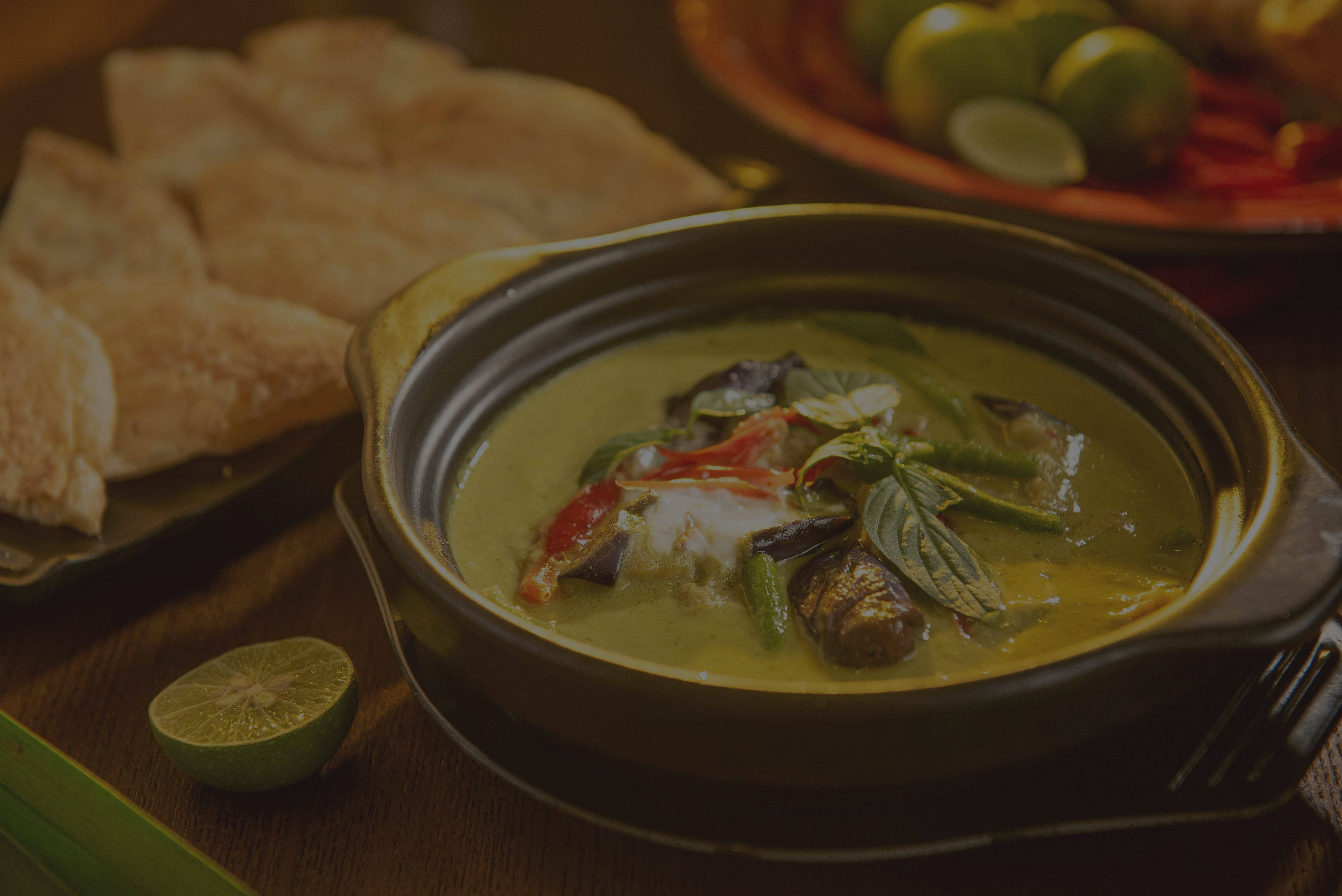
If you're craving a delicious meal with the distinctive flavour combinations of Southeast Asia, there are many tasty Thai recipes to choose from. One of the most famous dishes is green Thai curry, named after its delightful colour. Read on to discover how to make Thai green curry just right, making it taste like it was prepared in Thailand by a skilled cook.
How to cook green Thai curry
There are many different versions of this adaptable dish. You can make your own or follow a recipe if you prefer, but for an authentically tasting outcome, you should bear in mind the steps described below. By doing so, your Thai green curry will always be tasty, with just the right blend of flavours.
How to cook traditional Thai green curry
Check out this Thai green chicken curry recipe if you want guidance on cooking a traditional green Thai curry. For best results, follow these steps:
- Prepare the vegetables for the dish before cooking the chicken. This way, the chicken won't be overcooked while, for example, slicing peppers or chopping green beans.
- Heat the oil in the wok before adding the chicken. Cut the chicken into bite-sized chunks so that they will be easy to pick up when served.
- Peppers, green beans and other vegetables should be fried with the chicken, but only for a minute or so. This way, they retain their crunch.
- Add Thai curry paste when the main ingredients are cooked, and distribute it in your pan so the flavouring gets everywhere.
- Cover your wok and lower the heat when the wet ingredients —coconut milk and soy sauce— are added.
- Confirm the chicken is cooked through, then season your dish with salt, pepper and more lime juice to taste.
- Fresh coriander and Thai basil leaves strewn over the top of the dish give an authentic look and flavour to green curry.
How to cook vegetarian green Thai curry
Preparing a veggie-style Thai green curry isn't much different from the traditional dish with chicken. Here are the main things to remember when opting for a vegetarian version:
- To add bulk to your dish, consider adding some root vegetables in place of meat. Par-boiled potatoes or aubergine, cut into chunks, are ideal for this purpose.
- For a veggie Thai green curry, fish sauce or shrimp paste can be dispensed with, but you may lose some flavour as a result. Therefore, use a vegetarian stock cube after adding the coconut milk to help bring the dish to life.
- For a twist, try a veggie tofu green curry with tofu and toss in your favourite seasonal veggies.
- You can add peanuts or even peanut butter to a veggie Thai green curry, but check with your guests to ensure they do not have any nut allergies.
Green curry tips when cooking Thai meals
Here are some tips that will help you produce authentic green Thai curry. These pointers may also come in useful when preparing other Asian recipes.
- Use chicken breast meat for a succulent curry or, if you don't have any, go for filleted leg meat. Avoid chicken still on the bone, which will take longer to cook.
- You can use coconut butter or canned coconut milk for Thai curries, with the latter being far easier to handle since you can simply pour it in little by little until you obtain the consistency you need.
- Thai-style rice is perfect for the thick sauces of most curries from this part of the world, so be prepared to overcook it. Doing so makes it sticky and ideal for soaking up the sauce.
The secret of spicy Thai curry
Thai dishes often differ from many traditional curries because they have a distinctive combination of spices, which you wouldn't find in Malay, Indian or Nepali cuisine, for example. Although shop-bought green curry paste is convenient, you can make your own and tailor the ingredients to suit your style.
Blend a lemongrass stalk with the juice of a lime, plus a teaspoon of ground coriander and several cloves of garlic. Added to this mix should be galangal, or use a little ginger if you don't have it. Half an onion or a couple of shallots, along with shredded lime leaves and fresh coriander leaves, are also traditional ingredients in the paste.
Add to these uncooked ingredients some fresh Thai chillies, according to your preferred strength. An anchovy, some fish sauce, or shrimp paste can also be added if you're not making a vegetarian version of the curry. Keep any unused homemade paste in the fridge, though it will lose intensity over time. Alternatively, try Thai green pumpkin & broccoli curry for a unique twist on the classic dish.
Perfect Thai Green Curry FAQs
How do you make Thai green curry?
Fry diced chicken in a wok, adding chopped pepper, green beans and coriander as you go. Once stir-fried, add the green curry paste and cook it for 30 seconds. Then add coconut milk, dissolving it with the paste. Before serving with rice, add a generous squeeze of lime juice and soy sauce, then garnish with Thai basil leaves.
Which is hotter, red or green Thai curry?
This depends on the amount of green curry paste used. Generally speaking, red curries in Thailand are medium-hot, while green ones are usually a little hotter. That said, this varies from region to region.
What should you serve with Thai green curry?
Rice is traditionally served with any spicy Thai curry. Nevertheless, if you want to serve noodles instead, there's nothing wrong with this accompaniment. Give each dish you serve a quarter of fresh lime to squeeze over as a superb finishing touch.
How do you make Thai green curry paste?
Thai green curry paste is made from lemongrass, lime juice, ground and fresh coriander, chillies, garlic, galangal (similar to ginger), shallots and shredded lime leaves. Blitz them together in a food processor with some vegetable oil until a paste is formed. Add shrimp paste, fish sauce, or a finely chopped anchovy to add zing.
What vegetables go in green Thai curry?
Traditional green Thai curry contains green beans and peppers, but you can also add potato, carrot or aubergine to add bulk. This is a good idea for meatless versions of the dish. For a more balanced approach, consider a flexitarian diet that combines both vegetarian and meat options.