
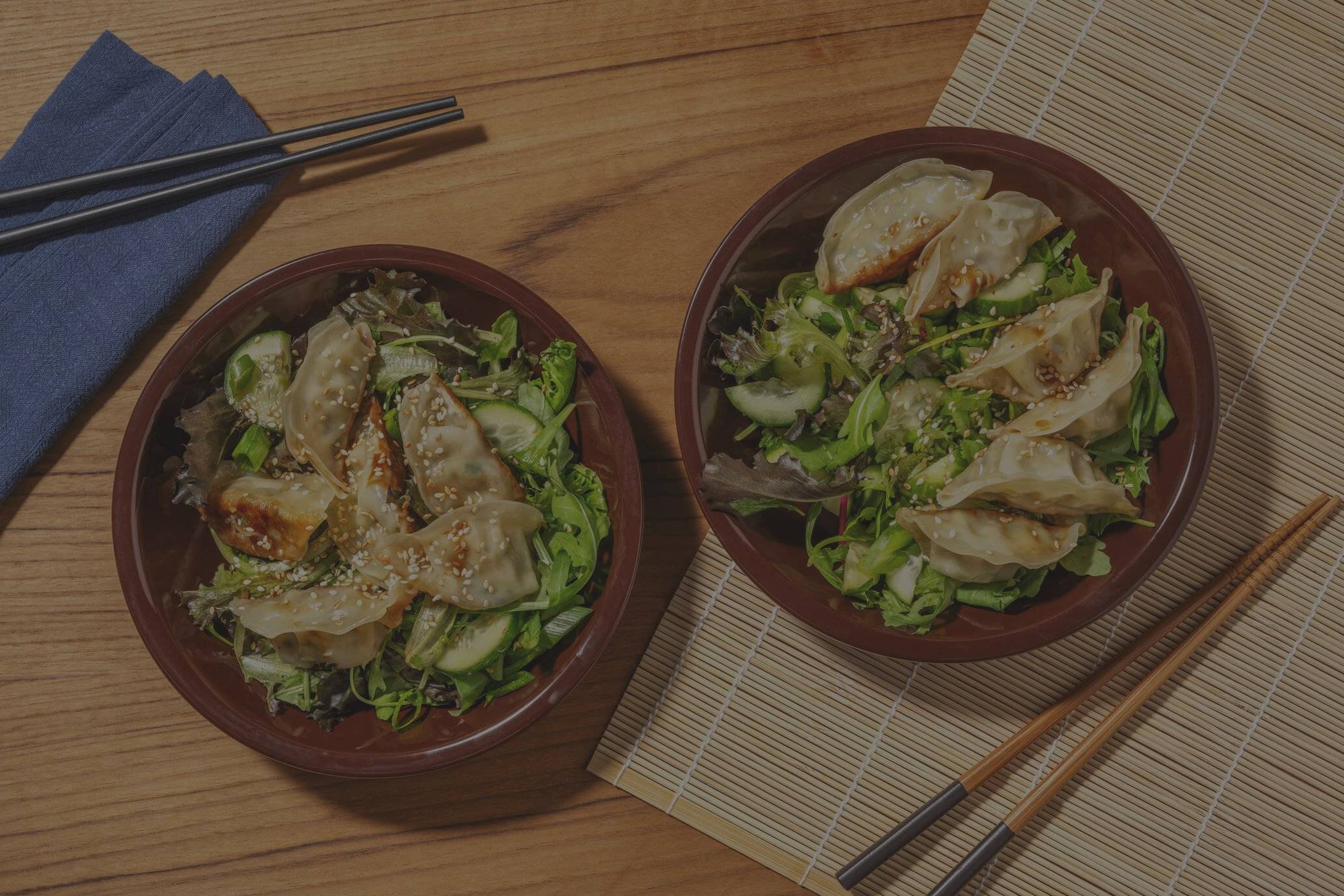
Derived from Chinese cuisine, gyoza is a traditional Japanese dish. It is sometimes served as an appetiser or a snack but can be a main meal accompaniment, too. These stuffed dumplings can be pan-fried for a perfectly crispy outside and soft and tender inside. An ideal food to master if you are into preparing Japanese recipes, they come in various forms, offering a great deal of adaptability.
How to cook gyoza at home
To make about 20 gyoza, you will need 200g of plain flour, something that is often included in a typical grocery delivery, so be sure you have enough before you begin. Because gyozas are small, this number would be sufficient as a starter for a family of four or a main meal for two.
Crispy chicken gyoza recipe
This chicken gyoza recipe will give you a basic idea of what to do when making Japanese gyoza. Alternatively, check out this sticky chicken gyoza recipe or these instructions for making chicken & veggie potstickers for different flavour combinations. That aside, here are the steps you'll need to follow to ensure crispiness and juiciness in home gyoza making.
- Make the gyoza dough by gradually combining 200g of plain flour with 100 ml of warm water and a pinch of salt.
- Once the dough has formed, knead it for six or seven minutes until smooth, and allow it to rest for half an hour.
- Divide the dough into approximate 15g portions, forming them into balls with the palms.
- On a flour-dusted work surface, roll each ball into a circle to make the gyoza casing, known as a wrapper. Each circle should be about 10 cm across.
- Place 200g of chicken breast or filleted thigh meat into a food processor and blitz it to form a paste, washing hands after handling the raw chicken.
- Finely chop 100g of savoy or napa cabbage along with a clove of garlic and a chopped spring onion, adding them to the chicken.
- Season the filling with a little powdered or grated ginger, plus a tablespoon of soy sauce and sesame oil.
- Spoon the filling onto one side of the gyoza circle and fold it over, sealing them with a little water to make semi-circular, pasty-like shapes.
- Heat some sesame oil in a non-stick pan and place the prepared gyoza dumplings in with one of the flat sides down.
- Without allowing the gyozas to touch one another, fry them for three minutes until they begin to brown and become crispy.
- Add about 75 ml of water combined with a teaspoon of flour to the pan, taking care it doesn't spit. The addition of a little flour helps to form a crust.
- Steam cook the previously pan-fried gyoza with a lid on the pan for about six minutes.
- Remove the lid, allow the water vapour to escape, and cook for another couple of minutes to ensure the crispy gyozas turn out perfectly.
- Remove from the pan and serve.
For a more filling option, try chicken gyoza katsu curry noodles, which pairs crispy dumplings with rich Japanese curry sauce.
Vegetarian gyoza dumplings
Vegetarian gyoza is made in much the same way as meat-based ones with a few refinements, as this gochujang glazed veggie gyoza recipe makes clear. Here are the key things to bear in mind when preparing vegetarian gyoza dumplings:
- Follow all of the steps outlined above, but take care to squeeze away fluid that might have formed around the vegetables to prevent the gyoza from being too soggy.
- Napa cabbage is traditional in vegetarian gyoza, but you can use grated carrots or savoy cabbage instead.
- Mushrooms make for a good meat substitute. However, use them finely chopped and raw since they'll cook within the gyoza wrapper.
- Firm tofu is a protein-rich gyoza dumpling filling, but pat it dry before chopping it into suitably sized pieces for the dumplings.
- 50g of shelled edamame is also a good gyoza filling, which adds a mild sweetness to the dumplings.
For a balanced diet with both plant-based and meat options, check out the flexitarian diet, which offers meal kits to suit every preference.
Tips for ensuring crispy gyoza
Cooking perfectly crispy Japanese gyoza can be problematic if you end up overcooking. To avoid this:
- Begin using medium to high heat and then reduce the heat for the final stage, ensuring the inside fully cooks without burning the outer casing.
- Don't overcrowd the pan. Cook in batches if you don't have one that is sufficiently large.
- If your gyoza consistently turns out overcooked, reduce the amount of floured water you use for the steaming phase.
- Use sesame or walnut oil for frying since other oils might not be up to the job.
For an easy dinner with balanced flavours, try pork gyoza & veggie stir-fry, a quick and satisfying meal option.
Pot cooking gyoza
In Japan, gyozas are sometimes added to wet dishes, such as gyoza nabe. This way of cooking means you won't end up with crispy gyoza, but they're just as tasty. It is a good alternative if you have mastered fried gyoza and want to try something new.
For more delicious meal inspirations, explore dinner ideas, featuring a range of creative dishes for every taste.
Cooking Gyoza FAQs
Did dumplings originate in China or Japan?
Dumplings first originated in China before spreading to Japan and Korea, with records going back to the Eastern Han Dynasty in the third century. European dumplings developed separately from these Asian culinary traditions.
What is a gyoza crust made of?
Flour and water form the distinctive crust that crispy gyoza is known for. It is known as hanetsuki gyoza in Japan, and this translates as a gyoza skirt.
What is gyoza filling made from?
Japanese gyoza can have various fillings. Although minced pork is traditional, other meats, including chicken or even shrimp, are common. Cabbage, garlic, and ginger are common, too, and soy sauce is often added to provide seasoning.
How do you make crispy frozen gyoza?
Heat a pan with sesame or walnut oil and add the frozen gyoza, making sure they don't touch one another. Wait until the bottoms are brown, then carefully add water before covering the pan. Steam them for about six minutes, remove the lid, and continue to crisp for another couple of minutes.
What is the difference between dumplings and gyoza?
Gyoza are Japanese, but dumplings are more often Chinese. They're often distinguishable because Japanese gyozas have thinner outer dumpling casings. Additionally, gyoza is smaller and typically formed into a half-moon shape.